The altered experience of time in passion
Simple PassionThe altered experience of time in passion describes how the narrator’s attachment to A changes the way time is anticipated, inhabited, and remembered. Waiting makes the future dominate the present; during their meetings, the hours seem to contract around the prospect of separation; afterward, the narrator’s body and memory continue to register the relationship. The result is not merely a change in mood but a different measure of duration, one that the narrator eventually names as bodily.
Waiting as a Held Present
The wait occupies the narrator’s attention so completely that, after dressing, putting on makeup, doing her hair, and tidying the house, she cannot turn to reading or marking essays. She wants to keep her mind fixed on the anticipation rather than let another activity intrude. On paper, she records the date and time, the expectation that A will come, and fears that he may not appear or may no longer desire her. Later she returns to the same sheet and records that he did come, adding details of the meeting in an unplanned manner. The two entries sit on either side of an interval filled by the encounter, which makes the writing before and after seem trivial by comparison.
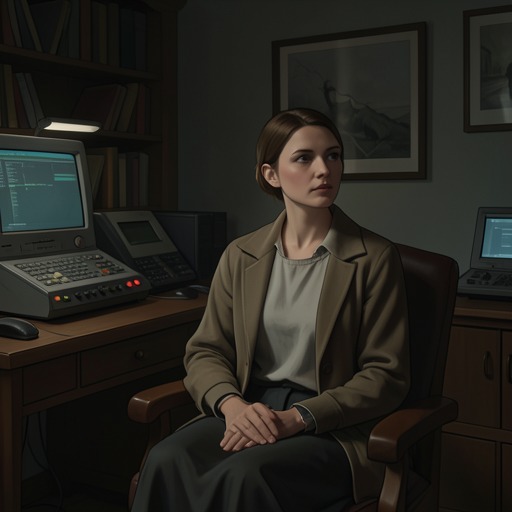
Waiting also changes ordinary public spaces into opportunities for inward repetition. On railway platforms, in the Metro, and in waiting rooms, the narrator begins daydreaming about A as soon as she sits down. The onset brings a shudder of happiness, and she compares the repeated flow of images and memories to a form of physical pleasure. In this account, thought does not simply represent the absent person: repeated recollection becomes an experience with bodily force. Empty time is therefore not neutral. It is taken over by anticipation and by the mental return of A.
The Clock and the Visit
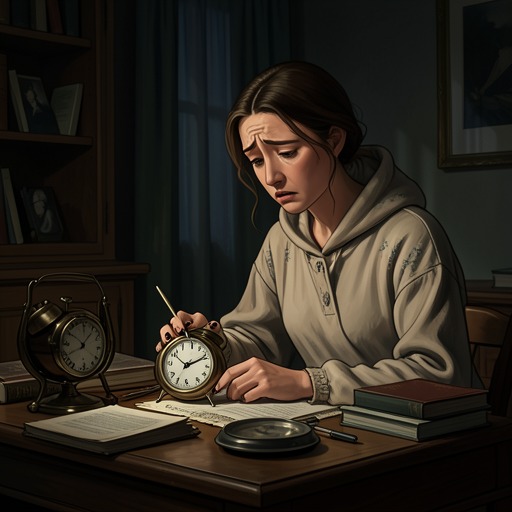
The meetings last only a few hours, but the narrator experiences their duration through signs of its ending. She removes her watch before A arrives, while he keeps his on; she dreads his discreet glance at it. Even a brief trip to the kitchen for ice leads her to consult the clock above the door and count down the remaining hours. Her astonishment at the question of where the present has gone follows from this division: the meeting is happening, yet its end is already organizing her awareness of it.
A’s departure becomes legible through the slow sequence of dressing. The narrator watches him put on his clothes and fasten his tie before putting on his jacket; when the jacket is on, the visit is over. The ordinary actions of getting dressed acquire the force of a countdown, turning duration into a series of visible steps toward absence. The narrator describes herself not as standing outside this passage of time but as time flowing through her. Time is registered as an alteration of her own condition rather than as a neutral interval on a clock.
Aftermath, Objects, and Embodied Duration
Once A has left, fatigue overtakes the narrator. She sits among the glasses, plates and leftovers, the overflowing ashtray, clothes, and sheets that remain in the rooms, and delays tidying. She wants the disorder to remain because each object recalls a moment of the meeting. The room becomes a still-life of the relationship: its material traces hold a sequence of particular memories, but also the pain of a visit that has ended. The narrator’s reluctance to restore order makes the aftermath last beyond the encounter itself.
The passage of time is also registered through the narrator’s decisions about her body. She postpones washing until the next day, describing the delay as a way to retain a trace of the meeting. This detail belongs to the same temporal pattern as the untouched disorder: both resist the immediate conversion of an encounter into something finished and past. Rather than treating departure as a clean boundary, the narrator carries its consequence into the hours that follow.
Memory, Repetition, and Writing
The narrator tries to reconstruct A in detail, recalling his green eyes, the lock of hair on his forehead, the curve of his shoulders, and other features of his appearance. She recognizes how close this act of reconstruction comes to hallucination, and how difficult it is to distinguish vivid memory from madness. Absence thus produces its own altered present: the remembered person can feel near, although the narrator knows that what she is experiencing is recollection.
Across this period, her thoughts and actions repeat history because she wants the present to turn back into a past that opened onto happiness. The wish clarifies the double movement of memory: it keeps the relationship active in the present, but it also points toward a time that cannot simply be recovered. Repetition is at once an attachment to what has happened and an effort to make it happen again.
The narrator began writing about waiting approximately two months after A’s departure, without remembering the exact day. She can associate the relationship with particular historical and domestic markers: the October riots in Algeria, the heat and hazy sky on July 14, 1989, and buying a blender in June, the day before they were due to meet. By contrast, she cannot connect the writing of a particular page with a rainstorm or with major public events such as the fall of the Berlin Wall or the execution of the Ceausescus. Passion and writing each alter the perception of time, but not in the same way: lived experience leaves sharply differentiated personal memories, while the act of writing does not attach itself to a reliably remembered day.
Significance
The concept joins private duration to the body, to material surroundings, and to the form of recollection. Watches and clocks mark the approaching end, yet they cannot explain the narrator’s experience of a present already shaped by departure. Objects in the room and details of A’s appearance preserve moments without restoring the relationship; written notes frame the meeting but cannot capture the interval that made everything else seem secondary. The account’s central contrast is between chronological time, which moves forward, and passionate time, which is spent waiting, compressed during the visit, and then made to recur through memory. The narrator’s statement that she measured time with her whole body gives this contrast its clearest formulation: passion is not only something remembered in time, but a condition that changes how time is felt.